Most advanced "Kanasa" servers do not rely on a single card. They participate in a network (e.g., OSCam with CacheEX). When a client requests a key, the server first checks its own card. If it doesn't have it, it asks peer servers (trusted partners) for the key. This creates a massive global pool of channels.
High-speed internet is not mandatory because key exchanges require very little bandwidth. However, low latency (ping) and stability are critical to prevent on-screen freezing or glitching.
: Pay-TV operators encrypt their satellite signals using Conditional Access Systems (CAS). To decrypt the channel, your receiver needs a constantly changing mathematical key called a Control Word (CW).
This comprehensive article explores what CCcam Kanasa is, how CCcam technology functions, the mechanics of card sharing, and the crucial legal and security implications users must consider. What is CCcam? Cccam Kanasa
While exploring the mechanics of CCcam Kanasa is technically fascinating, the legal and cybersecurity landscape surrounding cardsharing presents severe risks. Intellectual Property and Copyright Laws
Running or using a CCcam service is not without significant risks, both technical and legal.
For the uninitiated, this keyword sits at the intersection of satellite technology, server-client architecture, and the global push for content accessibility. But what exactly is Cccam Kanasa? Is it a software, a service, or a technique? This article will explore every facet of this topic, providing a comprehensive guide for hobbyists and tech professionals alike. Most advanced "Kanasa" servers do not rely on a single card
He didn't report it. Instead, he reached for his soldering iron, added a new capacitor to his rig, and whispered into his headset, "Kanasa Node 02, standing by." CCcam protocols actually work, or should we explore more fictional lore about the town of Kanasa? OSCam Explained: Unlocking Its Power & Understanding Risks Dec 4, 2568 BE —
CCcam Kanasa represents the intersection of powerful streaming technology and the ongoing challenge of digital rights management. It offers a user-friendly gateway to the technical world of CCcam protocols, promising a wide array of content at a low price. For technology enthusiasts, understanding the inner workings of protocols like CCcam is a fascinating technical exercise.
: Providing daily or short-term free test lines (often called "C-lines") to users wanting to test server stability. If it doesn't have it, it asks peer
Satellite providers continually update their encryption algorithms (moving toward advanced pairing systems like Nagravision and Videoguard) to render CCcam obsolete.
When entering the world of card sharing, users inevitably encounter the choice between and OScam . While CCcam is the more famous name, OScam is often the superior technical choice for modern infrastructure.
The climax of the film offers a cathartic release that emphasizes the necessity of ritual in healing. After her mother passes away, Fausta is unable to bury her in their village due to financial constraints. The film concludes with Fausta immersing her mother’s body in the ocean, a makeshift burial that merges the earth (the potatoes and the body) with the water. This act allows Fausta to reclaim her body and her autonomy. By letting go of her mother’s physical form, she begins to purge the "milk of sorrow" from her system. The final scenes suggest that while trauma cannot be erased, it can be transformed.
flickered with activity. To most, the strings of code and IP addresses were gibberish, but to Elias, they were the threads of a vast, invisible tapestry.
While modern streaming has largely shifted toward IPTV, traditional card sharing remains highly valued by home entertainment enthusiasts for its raw broadcast quality and ultra-low bandwidth consumption. Platforms like cccamfree-kanasa.com cater to this market by providing configuration lines (Clines) that connect satellite receivers directly to decryption servers.
New Version 26.1: Go Speed Racer Go
New Version 25.12: Higher & Higher
New Version 25.10: Please Mr. Please
New Version 25.07: Hot Hot Hot
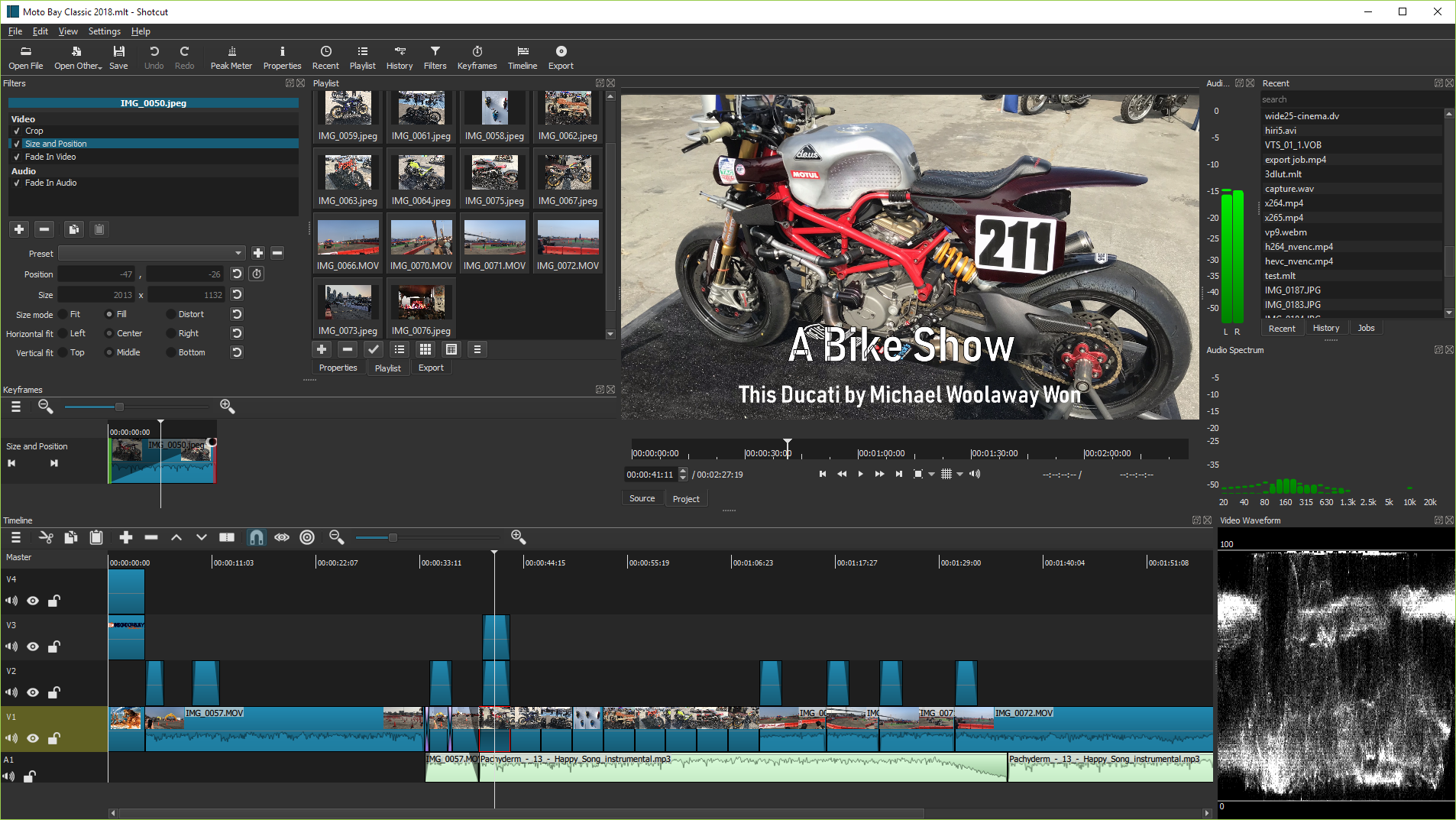
Shotcut was originally conceived in November, 2004 by Charlie Yates, an MLT co-founder and the original lead developer (see the original website). The current version of Shotcut is a complete rewrite by Dan Dennedy, another MLT co-founder and its current lead. Dan wanted to create a new editor based on MLT and he chose to reuse the Shotcut name since he liked it so much. He wanted to make something to exercise the new cross-platform capabilities of MLT especially in conjunction with the WebVfx and Movit plugins.
Lead Developer of Shotcut and MLT